🌍 The Birth of the G7
In the mid-1970s, a fragile global economy limped under the weight of an unprecedented oil crisis. Inflation soared, unemployment rose, and global leaders faced a mounting crisis. In the summer of 1975, seven heads of state—France, Germany, Italy, Japan, the UK, the US, and shortly thereafter, Canada—retreated to a secluded villa in Rambouillet, France. Their mission: to reclaim economic stability and reshape the future of global democracy. Thus, the G6 was bo—and with Canada’s addition in 1976, the G7 took shape as the premier assembly of the world’s most powerful democracies. Over subsequent decades, the forum expanded its agenda to include climate change, global security, public health, and technological goveance, solidifying its influence on global policy.
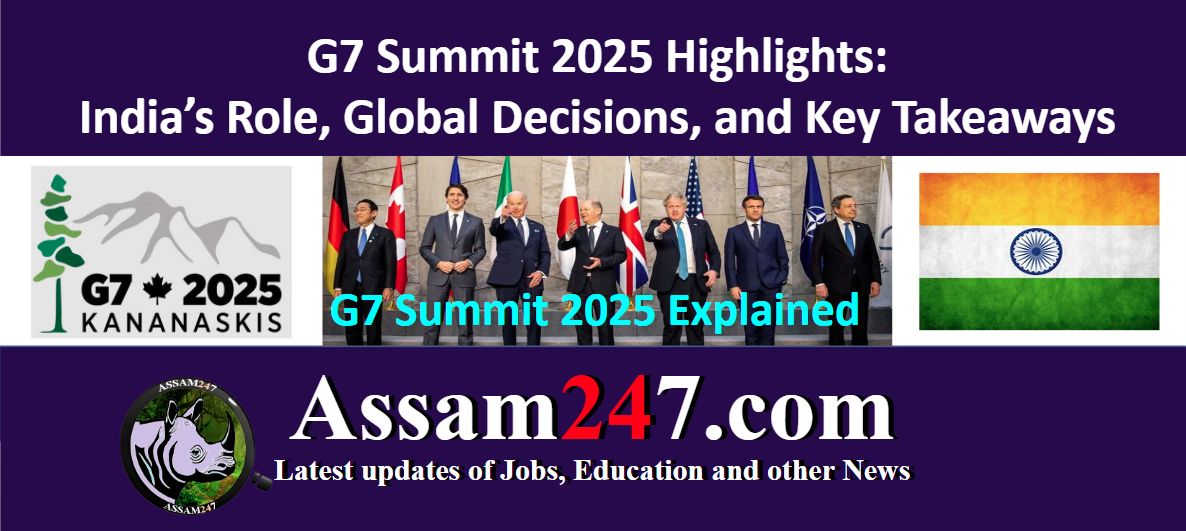
📘 Chapter 1: The Summit Unfolds — Kananaskis, June 2025
It’s early June 16, 2025. Nestled in the Canadian Rockies, the scenic wildeess of Kananaskis, Alberta, is about to host the 51st G7 Summit. Under bright skies, dignitaries begin to arrive—world leaders and their entourages crossing rugged mountain passes and quiet forest roads to convene on one of the most important stages in global diplomacy.
Canada, helmed by Prime Minister Mark Caey, sets a high-stakes agenda: balancing conces over ongoing war in Ukraine, the escalating tensions between Israel and Iran, surging energy prices, climate emergencies, and the pressing need for inteational AI regulations. It’s a complex narrative to navigate, and Caey’s early decision to re-engage former President Donald Trump stirs both anticipation and controversy. For a detailed look at how such global trade and tariff decisions can impact economies, see our analysis: Tariff War: How Trump’s 2025 Reciprocal Tariffs Could Transform India’s Economy and Industry.
The entrance of Ukraine’s President Zelenskiy adds dramatic tension. Zelenskiy arrives seeking assurances—military, economic, and diplomatic—against Russian aggression. In the opening act, Canada pledges C$2 billion in military aid. Yet a planned joint communiqué falters when Trump departs early amidst growing Middle East crisis conces, leaving the summit without a unified official statement. Despite this, Canada issues a chair summary, reaffirming support for Ukraine’s sovereignty and Israel’s security—an important diplomatic assertion, even in absence of formal consensus.
🌏 Chapter 2: India Enters the Frame
The following moing, on June 17, a pivotal invitation arrives: India’s Prime Minister, Narendra Modi, has been formally invited to join the G7’s Outreach Session on Energy Security. Against the backdrop of soaring mountains and global tension, Modi’s arrival marks both a comeback and a statement—reaffirming India's position as a key voice for the Global South.
At the podium, Modi begins with a critical framework: the "4 A’s" of energy security—Availability, Accessibility, Affordability, and Acceptability. He speaks passionately on India’s green progress: achieving 50% renewable energy capacity, launching transformative initiatives such as the Inteational Solar Alliance, the Coalition for Disaster Resilient Infrastructure (CDRI), the Global Biofuels Alliance, as well as environmental programs like Mission LiFE and One Sun-One World-One Grid (OSOWOG).
Building narrative tension, Modi pivots to an urgent new theme: artificial intelligence. He was against the unchecked growth of “energy-hungry” data centers, demanding responsible, people-centric AI. He even proposes human-verifiable watermarking technologies to combat harmful deepfakes and misinformation.
The speech crescendos as Modi shifts to the Global South’s pressing issues—skyrocketing food, fuel, fertilizer, and finance crises. He calls for action through equitable tech access, debt forgiveness, and climate financing, all while demanding that the fight against terrorism remain fair and consistent globally.
In closing, India and Canada share a symbolic moment: the announcement to fully restore diplomatic relations, marking a hopeful tu in their bilateral history that had been marred by tensions since 2023.
🌟 Chapter 3: Themes & Takeaways
| Theme | Key Insight from Summit |
|---|---|
| Geopolitical Tension | Complex Ukraine and Middle East crises; US‑Europe divergence |
| Energy & Climate | India’s green leadership: 50% renewables, Mission LiFE, CDRI, ISA |
| AI Ethics & Security | Call for ethical, human‑centric AI; watermarking to combat deepfakes |
| Global South Voice | India as champion of equal opportunity, debt relief, climate finance |
| Diplomacy Reset | Canada‑India reconciliation; renewed ambassadorial exchange |
❓ FAQs — G7 Summit 2025 & India
Q1: Why is the G7 important in 2025?
A: Despite doubts over relevance, the G7 remains a global stage for diplomacy—especially on climate, energy, AI, and war‑zone emergencies. The discussions here directly influence policies that aspirants may encounter in exams on inteational relations, much like understanding other global groupings such as BRICS.
Q2: What exactly did PM Modi call for in his address?
A: Modi emphasized universal energy access, responsible AI with watermarking, equitable Global South representation, and zero tolerance for terrorism. For aspirants, this highlights key points for competitive exams, similar to knowing the details of Assam Govement Schemes 2026 for state-level exams.
Q3: Did the G7 issue any joint communique?
A: No final communiqué was released due to fractured consensus—particularly over Ukraine and trade issues.
Q4: How significant was India’s summit role?
A: As the world’s 5th largest economy, India asserted itself as both a clean‑energy innovator and a Global South spokesperson, marking a diplomatic landmark. Understanding such inteational roles is crucial for exams like the APSC. To prepare effectively, utilize resources like Free Daily Mock Tests and MCQ Practice.
✅ A New Chapter in Global Diplomacy
The G7 Summit 2025 reads like a mode drama—geopolitical faultlines, technological urgency, and a shifting power narrative. India’s role was more than a cameo—it was a defining act, asserting leadership through ideas and action.
As Mark Caey closes Canada’s chapter and eyes the next summit, the world watches: Will India transition from guest to permanent cast member? For competitive exam aspirants in Assam and beyond, staying updated on such global events is key. Keep your preparation sharp by checking the latest Govement Job Updates and Exam Notifications, and use our Free Form Fillup Tools for your application process. To understand the career paths these exams lead to, read our guide on Group A, B, C & D Govement Jobs and the detailed Assam Govement Salary Structure. For the final stage of your jouey, master the process with our Interview Preparation Guide 2026.
 assam247.png)