Introduction
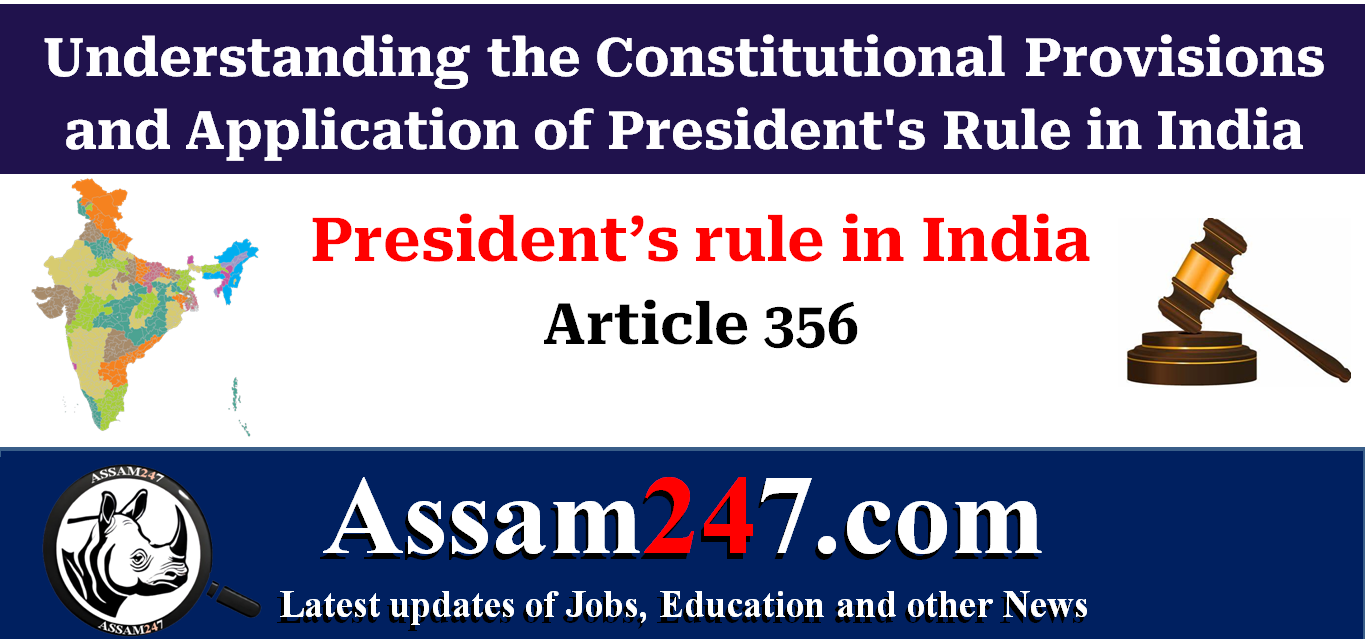
In the democratic framework of India, the Constitution provides mechanisms to maintain the stability and integrity of state goveance. One of the most crucial provisions in this regard is President’s Rule, articulated in Article 356 of the Constitution of India. This provision allows the central govement to take direct control of a state's administration when the elected govement of the state is unable to function according to the constitutional provisions. The imposition of President’s Rule is a significant constitutional action, often evoking debate regarding its use, political ramifications, and judicial oversight. A clear understanding of such constitutional provisions is essential for students and aspirants, as explained in The Indian Constitution Explained .
What is President’s Rule?
President’s Rule refers to the suspension of a state’s elected govement and legislature, with the central govement assuming direct control over the state's affairs. It is essentially a mechanism of Central Govement intervention in a state under specific circumstances goveed by Article 356 of the Indian Constitution. When the President believes that a state govement cannot function according to constitutional provisions, a proclamation may be issued.
This means the central govement takes over administration, the state legislature is either suspended or dissolved, and the Goveor acts as the constitutional head on behalf of the President. Such federal interventions are frequently discussed in competitive exams and polity interviews, similar to themes covered in the Interview Preparation Guide for UPSC, APSC, and ADRE .
Article 356: Constitutional Provisions
Article 356 of the Constitution of India provides the legal framework for imposing President’s Rule. It states that if the President is satisfied that the govement of a state cannot be carried on in accordance with constitutional provisions, a proclamation may be issued.
Section 1 of Article 356: The President can declare a state under President’s Rule if the state govement fails due to a breakdown of constitutional machinery, such as loss of legislative majority or severe law-and-order failure.
Section 2 of Article 356: The proclamation remains valid for six months and may be extended up to a maximum of three years with Parliamentary approval.
Section 3 of Article 356: The President may assume executive authority over the state through the Goveor.
Grounds for Imposing President’s Rule
President’s Rule may be imposed under the following circumstances:
- Breakdown of Constitutional Machinery: When goveance collapses due to instability, violence, or loss of majority in the legislative assembly.
- Failure to Conduct Elections: If elections cannot be held or no govement can be formed post-election.
- Law and Order Crisis: In cases of inteal conflict, large-scale violence, or breakdown of civil administration.
- Inability to Form a Stable Govement: Hung assemblies without viable coalition support.
Historical Context of President’s Rule in India
Since the adoption of the Constitution, President’s Rule has been invoked several times:
- Punjab (1951): The first instance due to administrative breakdown.
- The Emergency (1975–77): Extensive use of Article 356 during the Emergency period raised serious conces over misuse.
- S.R. Bommai Case (1994): A landmark judgment that restricted arbitrary use of President’s Rule and reinforced judicial review.
- Recent Instances: Uttarakhand (2016) and Manipur (2025) due to political and law-and-order crises.
Such developments are frequently covered under current affairs sections and polity notes for exams like APSC and ADRE, which aspirants can revise through Knowledge Enhancement resources on Assam247 .
Judicial Oversight: A Critical Safeguard
Judicial oversight ensures that Article 356 is not misused. In the S.R. Bommai judgment, the Supreme Court ruled that:
- Judicial Scrutiny: Courts can examine the validity of President’s Rule proclamations.
- Federal Balance: The ruling reaffirmed India’s federal structure.
- Accountability: The central govement must justify its actions before Parliament.
Criticism and Challenges of President’s Rule
- Political Misuse: Allegations of dismissing opposition-led state govements.
- Erosion of State Autonomy: Excessive centralization of power.
- Delayed Democratic Process: Prolonged President’s Rule can delay elections.
Recent Developments: President’s Rule in Manipur (2025)
In 2025, President’s Rule was imposed in Manipur due to escalating ethnic violence and political instability. The state administration failed to control prolonged unrest, prompting central intervention. This episode highlighted the delicate balance between constitutional necessity and state autonomy, similar to other federal goveance issues discussed in detailed studies on President’s Rule in India .
Impact of President’s Rule on Indian Democracy
President’s Rule can restore goveance during crises but may also weaken democratic representation if prolonged. Its effectiveness depends on restrained use, transparency, and judicial oversight.
Conclusion
President’s Rule remains a powerful constitutional tool intended to preserve goveance during exceptional situations. However, its misuse can undermine federalism and democracy. Careful application, supported by judicial scrutiny, is essential to maintain the balance between central authority and state autonomy. For aspirants preparing polity and current affairs, regular revision through free daily mock tests on Assam247 can significantly improve conceptual clarity.