Understanding the classification of government jobs in India is essential for job aspirants preparing for UPSC, SSC, State PSCs, and other competitive examinations. The Group A, B, C, and D categorization determines everything from salary structure to promotion prospects, job responsibilities, and eligibility criteria. With increasing competition for government positions, knowing which group aligns with your qualifications and career aspirations can significantly impact your preparation strategy and long-term professional journey.
ARTICLE THEME:
This comprehensive guide explains the official classification of government jobs in India—Group A, B, C, and D—detailing their distinct roles, salary structures, eligibility requirements, and career progression paths.
What Are Group A, B, C & D Government Jobs?
The classification of government jobs into Groups A, B, C, and D is an administrative structure used by the Government of India and most state governments to categorize civil service positions based on responsibilities, salary scale, and entry requirements. This system was formally established under various service rules and is currently governed by the Department of Personnel and Training (DoPT) guidelines and the 7th Central Pay Commission (CPC) recommendations implemented from January 1, 2016.
The classification originates from historical administrative structures and has evolved through successive Pay Commissions. According to official government documents, including the Central Civil Services (Classification, Control and Appeal) Rules, 1965, these groups define the hierarchical structure of government employment, with Group A representing the highest administrative and policy-making positions, and Group D comprising supportive and manual roles. Most state governments follow a similar classification for their respective services.
Why Understanding Government Job Groups Matters
For job aspirants, understanding these groups is crucial for several practical reasons. First, it helps candidates identify which examinations they are eligible for based on their educational qualifications. Second, it provides realistic expectations about career progression, salary, and job responsibilities. Third, it enables informed decision-making when choosing between multiple job opportunities. Finally, understanding the classification system helps in long-term career planning, as movement between groups typically requires additional examinations or promotions.
This knowledge is particularly relevant for:
- Students and fresh graduates deciding which competitive exams to pursue
- Working professionals considering career transitions to government service
- Parents and career counselors advising young aspirants
- Researchers and policymakers studying India's administrative structure
Key Facts and Official Classifications
According to Department of Personnel and Training (DoPT) guidelines and the 7th Pay Commission framework:
- Group A Services include All India Services (IAS, IPS, IFS) and Central Services (IRS, IFS, etc.)
- Group B is divided into Gazetted and Non-Gazetted officers
- Group C comprises clerical and supervisory staff
- Group D includes manual and supportive staff
- The classification determines Pay Levels under the 7th CPC Pay Matrix
- Promotion from lower to higher groups requires qualifying departmental exams or seniority
- Each group has distinct recruitment processes through different examining bodies
Detailed Group-Wise Breakdown
Group A Services (Gazetted Officers)
Group A constitutes the highest administrative and managerial positions in the Indian government. Recruitment occurs primarily through the Union Public Service Commission (UPSC) Civil Services Examination (CSE) and Engineering Services Examination (ESE).
Typical Positions:
- Indian Administrative Service (IAS)
- Indian Police Service (IPS)
- Indian Foreign Service (IFS)
- Indian Revenue Service (IRS)
- Indian Audit and Accounts Service (IA&AS)
- Defense Services (through UPSC/CDS)
- Scientists in DRDO, ISRO, BARC
Eligibility:
- Minimum educational qualification: Bachelor's degree from recognized university
- Age limit: 21-32 years (with relaxations for reserved categories)
- Nationality: Indian citizen for most services
Salary Structure:
- Starting Pay Level: Level 10 of 7th CPC Matrix
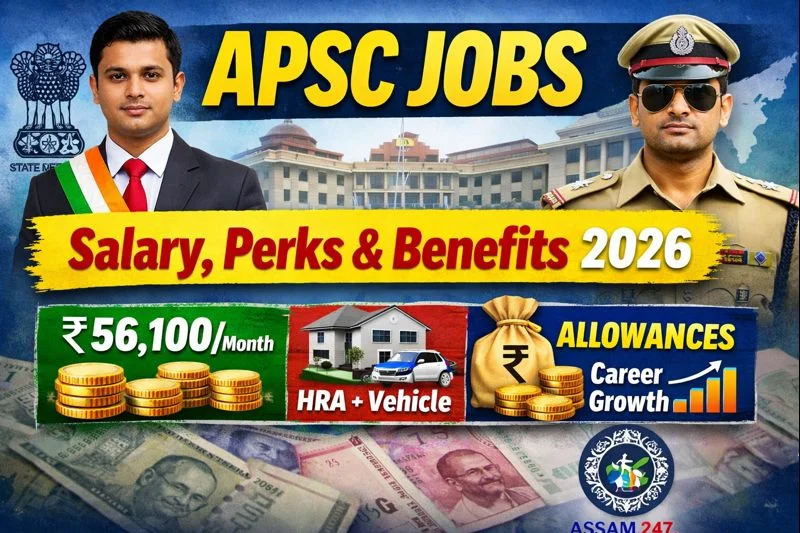
- Starting Basic Pay: ₹56,100 per month
- Gross monthly starting salary: Approximately ₹85,000-95,000 (including DA, HRA)
- Career progression up to Level 17 (Secretary level)
Group B Services
Group B is divided into two categories with different responsibilities and recruitment processes.
Group B (Gazetted):
- Typically entered through promotion from Group C
- Some direct recruitment through UPSC/SSC
Examples: Section Officer, Under Secretary (on promotion)
Group B (Non-Gazetted):
- Direct recruitment through Staff Selection Commission (SSC)
Examples: Assistant Section Officer (ASO), Tax Assistant, Inspector
Eligibility:
- Educational qualification: Bachelor's degree
- Age limit: Varies (typically 18-30 years)
- Recruitment through: SSC CGL, SSC CPO, departmental exams
Salary Structure:
- Starting Pay Levels: Level 6 to Level 9
- Starting Basic Pay: ₹35,400 to ₹53,600
- Gross monthly starting salary: ₹55,000-75,000
Group C Services
Group C forms the largest segment of government employees, comprising clerical, technical, and supervisory staff.
Typical Positions:
- Upper Division Clerk (UDC)
- Lower Division Clerk (LDC)
- Stenographer
- Technical Staff (lab assistants, technicians)
- Railway employees in non-gazetted categories
Eligibility:
- Educational qualification: 10+2 or graduation, depending on post
- Age limit: 18-27 years (varies)
- Recruitment through: SSC CHSL, RRB, State-level exams
Salary Structure:
- Starting Pay Levels: Level 1 to Level 5
- Starting Basic Pay: ₹18,000 to ₹29,200
- Gross monthly starting salary: ₹25,000-45,000
Group D Services
Group D includes supportive and manual staff positions, though many of these have been reclassified or upgraded in recent years.
Typical Positions:
- Multi-Tasking Staff (MTS)
- Peons, messengers, daftaries
- Sweepers, sanitation staff
- Chowkidars
Eligibility:
- Educational qualification: Minimum 10th pass (varies)
- Age limit: 18-25 years
- Recruitment through: SSC MTS, direct recruitment by departments
Salary Structure:
- Starting Pay Level: Level 1
- Starting Basic Pay: ₹18,000
- Gross monthly salary: ₹22,000-28,000
Real-World Examples and Career Paths
Example 1: From Group C to Group A
A candidate joins as a Lower Division Clerk (Group C) through SSC CHSL. After gaining experience and qualifying the departmental promotion committee exams, they may be promoted to Assistant Section Officer (Group B). Further, by clearing the UPSC Civil Services Examination while in service, they can enter Group A services like IAS or IPS.
Example 2: Direct Entry Differences
An engineering graduate has two paths: through SSC JE (Group B technical) with starting salary around ₹45,000, or through UPSC ESE (Group A engineering services) with starting salary around ₹85,000. The Group A position offers faster promotion, higher salary ceilings, and policy-making responsibilities.
Example 3: State vs Central Government
An Assam Police Constable (State Group C) and a Central Armed Police Force Constable (Central Group C) may perform similar duties but have different salary structures, promotion rules, and service conditions, as state governments often have their own pay commission rules.
Common Misunderstandings About Government Job Groups
Myth 1: "Group D jobs are being abolished"
Fact: While the 7th Pay Commission recommended upgrading many Group D positions to Group C, the classification still exists for certain roles. The government has been progressively upgrading positions but hasn't abolished the category entirely.
Myth 2: "All Group A jobs require UPSC CSE"
Fact: While most prestigious Group A services require UPSC CSE, some specialized Group A positions are filled through other UPSC exams (ESE, CMS), promotions, or direct recruitment by specialized agencies.
Myth 3: "Salary depends only on group classification"
Fact: Salary is determined by Pay Level within the 7th CPC matrix, which correlates with but isn't identical to group classification. Allowances (DA, HRA, special allowances) significantly impact take-home salary.
Myth 4: "Once in a group, you cannot move to another"
Fact: Government employees can move between groups through departmental promotion examinations, limited competitive examinations, or by qualifying for higher-level exams while in service.
Impact on Career Planning and Exam Preparation
For Students and Aspirants:
Understanding these groups helps in setting realistic career goals. A 12th-pass student should target SSC CHSL for Group C, while a graduate might aim for SSC CGL for Group B or UPSC CSE for Group A. Each path requires different preparation timelines, resources, and strategies.
For Working Professionals:
Those already in government service can plan their career progression better. A Group C employee can prepare for departmental exams for promotion to Group B, or simultaneously prepare for UPSC while working.
For Educational Institutions:
Colleges and coaching institutes can provide targeted guidance based on students' qualifications and aspirations, improving success rates in competitive examinations.
Long-term Implications:
- Group A officers typically reach senior policy-making positions
- Group B officers often become department heads at state/district levels
- Group C employees have stable careers with predictable progression
All groups offer job security, but responsibilities and growth potential differ significantly
Important Clarification
The information provided here is based on the 7th Central Pay Commission guidelines and current DoPT rules as of 2024. State governments may have variations in their classification and salary structures. Rules regarding probation periods, promotion criteria, and service conditions are subject to periodic revisions through official government notifications.
Readers are advised to verify specific details from:
- Official examination notifications from UPSC, SSC, and state PSCs
- Latest Department of Personnel and Training circulars
- Respective state government finance department notifications
- Official websites of recruiting agencies for the most current information
Official Sources & References
- Department of Personnel and Training, Government of India. "Central Civil Services (Classification, Control and Appeal) Rules, 1965" (as amended up to 2023)
- Ministry of Finance, Government of India. "7th Central Pay Commission Report" (2016, implemented from January 1, 2016)
- Union Public Service Commission. "Civil Services Examination Notification 2024"
- Staff Selection Commission. "Combined Graduate Level Examination Notification 2024"
- Government of Assam, Personnel Department. "Assam Civil Services Rules" (updated editions)
- Department of Expenditure, Ministry of Finance. "Office Memorandum on Implementation of 7th CPC" (2016)
Frequently Asked Questions (FAQs)
Q1. What is the main difference between Gazetted and Non-Gazetted officers?
Gazetted officers (typically Group A and some Group B) have the power to issue official stamps and attest documents, appear in government gazettes, and hold greater administrative authority. Non-Gazetted officers (Group B non-gazetted, Group C, Group D) perform implementation and clerical functions under supervision.
Q2. Can a Group D employee become a Group A officer?
Yes, through a combination of promotions, departmental examinations, and qualifying the UPSC Civil Services Examination while in service. However, this requires meeting educational qualifications and age criteria for UPSC exams.
Q3. Are probation periods different across groups?
Yes, probation periods vary: Group A typically has 2-3 years probation including foundation courses; Group B has 2 years; Group C has 1-2 years depending on department rules. For more details on probation requirements, refer to our guide on [Probation Period in Government Jobs].
Q4. How does Pay Level relate to Group classification?
While correlated, they're not identical: Group A starts at Level 10+, Group B at Level 6-9, Group C at Level 1-5, and Group D at Level 1. For a detailed explanation, see [7th Pay Commission Pay Levels Explained - Salary & Career Guide].
Q5. Which group offers the fastest career progression?
Group A services generally offer the fastest progression to senior positions. An IAS officer can reach district collector in 4-6 years, while Group B and C promotions depend on departmental vacancy and examination cycles.
Q6. Do all states follow the same A, B, C, D classification?
Most states follow similar classifications for their civil services, but nomenclature and specific rules may vary. Some states use Class I, II, III, IV instead of Groups A, B, C, D.
Q7. What are the educational requirements for each group?
Group A typically requires graduation; Group B requires graduation; Group C requires 10+2 or graduation depending on post; Group D requires 10th pass or equivalent. Specific posts may have additional technical qualifications.
For comprehensive exam preparation resources, explore these Assam247.com guides:
[Free Daily Mock Tests for ADRE, NET, GATE, TET, Banking & Assam Exams] for practice
[MCQ Practice – 3000+ Free Questions for APSC, ADRE & Assam Exams] for subject mastery
[Knowledge Enhancement – Free Mock Tests, MCQs & Video Tutorials] for holistic preparation
[How Government Salary Is Calculated in India] for understanding compensation structures