2025 Nobel Prizes: Celebrating Groundbreaking Achievements in Science, Peace, and Literature
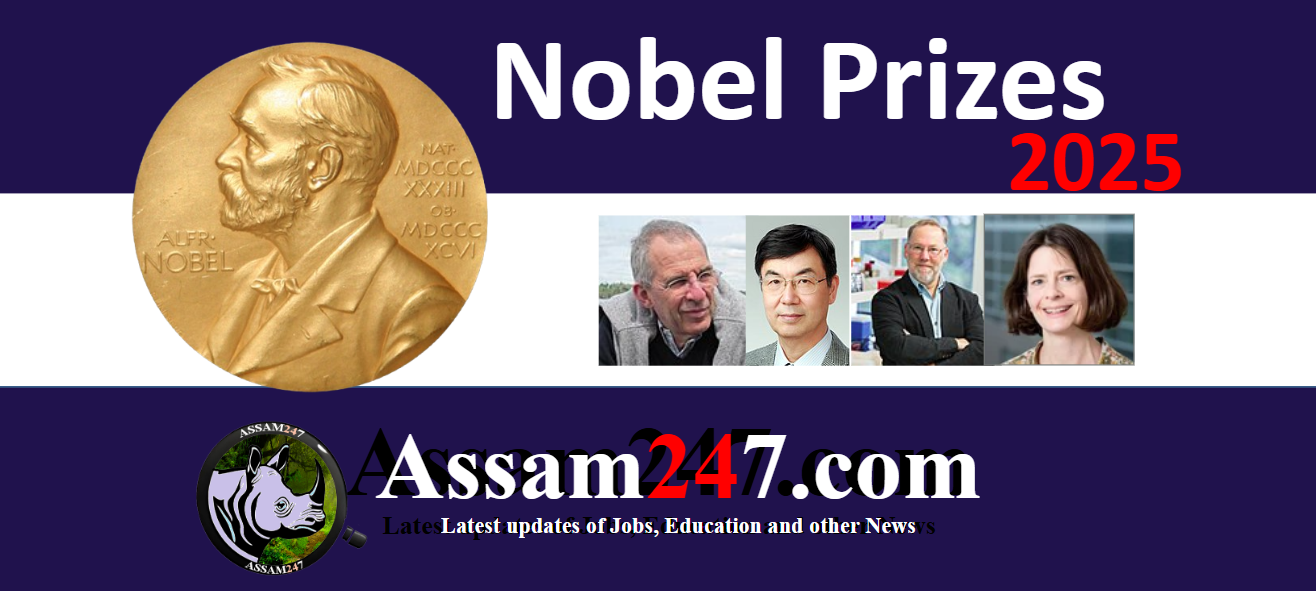
The 2025 Nobel Prizes recognise individuals whose work has significantly advanced scientific understanding, human rights, literature, and economic thought. Announced annually by the Nobel Foundation and associated institutions, these awards highlight contributions that have long-term global relevance. The 2025 Nobel laureates are particularly relevant for students, competitive exam aspirants, educators, and general readers tracking major inteational developments.
Article Theme: This article provides a factual overview of the 2025 Nobel Prize winners, their officially cited contributions, and why these achievements matter in today’s academic, technological, and social context.
What Are the Nobel Prizes?
The Nobel Prizes are inteational awards established through the will of Alfred Nobel in 1895. They are awarded annually in the fields of Physics, Chemistry, Physiology or Medicine, Literature, and Peace. An additional prize in Economic Sciences was later instituted by Sweden’s central bank.
Each prize is awarded by a specialised committee based on extensive evaluation of a candidate’s contribution to humanity.
Why the 2025 Nobel Prizes Matter
The 2025 Nobel Prizes highlight breakthroughs that influence mode healthcare, emerging technologies like quantum computing, environmental solutions, democratic values, and global economic policy. These awards also form an important part of current affairs and general knowledge syllabi for exams such as UPSC, APSC, SSC, and state-level competitive tests.
Official List of 2025 Nobel Prize Winners
Nobel Prize in Physiology or Medicine 2025
- Laureates: Mary E. Brunkow (USA), Fred Ramsdell (USA), Shimon Sakaguchi (Japan)
- Citation: For discoveries related to peripheral immune tolerance, explaining how the immune system avoids attacking the body’s own tissues.
- Why It Matters: This work forms the scientific basis for understanding autoimmune diseases, allergy control, and advances in immunotherapy.
Nobel Prize in Physics 2025
- Laureates: John Clarke (UK/USA), Michel H. Devoret (France/USA), John M. Martinis (USA)
- Citation: For demonstrating macroscopic quantum mechanical effects in electrical circuits.
- Why It Matters: Their work supports the development of quantum computers, ultra-sensitive sensors, and future quantum technologies.
Nobel Prize in Chemistry 2025
- Laureates: Susumu Kitagawa (Japan), Richard Robson (Australia/UK), Omar M. Yaghi (USA)
- Citation: For the development of metal-organic frameworks (MOFs).
- Why It Matters: MOFs are used in gas storage, carbon capture, clean energy research, and water purification technologies.
Nobel Prize in Literature 2025
- Laureate: László Krasznahorkai (Hungary)
- Citation: For a literary body of work that explores human existence through complex narrative structures and philosophical depth.
- Why It Matters: The award highlights the role of literature in examining social anxiety, culture, and human resilience.
Nobel Peace Prize 2025
- Laureate: María Corina Machado (Venezuela)
- Citation: For sustained efforts toward peaceful democratic reform and the protection of civil liberties.
- Why It Matters: The prize draws attention to non-violent political movements and democratic advocacy.
Nobel Prize in Economic Sciences 2025
- Laureates: Joel Mokyr (USA/Israel), Philippe Aghion (France/UK), Peter Howitt (Canada)
- Citation: For explaining innovation-driven economic growth.
- Why It Matters: Their theories help policymakers understand how technology and innovation sustain long-term economic development.
Key Facts at a Glance
| Category | Focus Area |
|---|---|
| Medicine | Immune system regulation |
| Physics | Quantum electrical circuits |
| Chemistry | Advanced porous materials |
| Literature | Contemporary philosophical writing |
| Peace | Democracy and civil rights |
| Economics | Innovation-based growth models |
Impact on Students, Careers, and Society
For students and exam aspirants, the 2025 Nobel Prizes provide case studies linking theory to real-world outcomes. Science students gain insight into emerging research directions, while humanities and social science leaers see how literature and peace efforts shape global discourse.
These achievements also influence future careers in research, public policy, technology, and education by setting benchmarks for meaningful global contributions.
Common Misunderstandings
- The Nobel Prize is not awarded for recent discoveries alone; long-term impact is critical.
- The Peace Prize can be awarded to individuals or organisations.
- The Economics Prize is officially named the “Sveriges Riksbank Prize in Economic Sciences in Memory of Alfred Nobel”.
Important Clarification
Nobel Prize citations and interpretations are based solely on official announcements by the Nobel committees. Readers are advised to verify details from nobelprize.org and related official sources, as explanatory material may evolve.
Official Sources & References
- Nobel Prize Official Website (2025)
- Nobel Foundation Press Releases (2025)
- Recognised inteational news agencies reporting Nobel announcements
Related Articles you might be interested
- The Nobel Prize: History, Selection Process, Prize Value & Last 5 Years of Winners
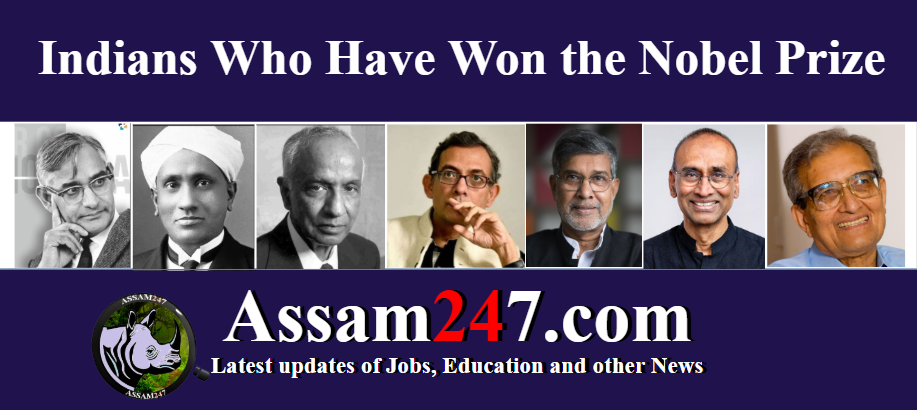
- Indians Who Have Won the Nobel Prize
Frequently Asked Questions (FAQs)
Who decides the Nobel Prize winners?
Independent committees appointed by Swedish and Norwegian institutions select the winners.
How often are Nobel Prizes awarded?
Nobel Prizes are awarded annually.
Is the Nobel Prize in Economics an original Nobel Prize?
No, it was established later by Sweden’s central bank in memory of Alfred Nobel.
Can a Nobel Prize be shared?
Yes, most Nobel Prizes can be shared by up to three individuals.
Why are Nobel Prizes important for competitive exams?
They form a core part of inteational current affairs and general knowledge sections.