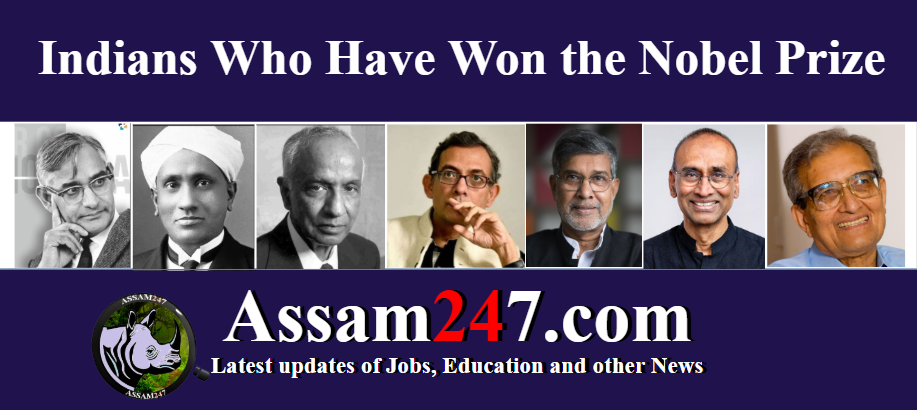
The Nobel Prize stands as the pinnacle of global recognition, celebrating breakthroughs that have fundamentally reshaped our understanding of the world and advanced human welfare. For a nation like India, with its rich history of scholarship, scientific inquiry, and social reform, its Nobel Laureates are not just individual achievers but national icons whose joueys offer profound lessons in perseverance, intellect, and service. This article provides a detailed, factual examination of every Indian and Indian-origin Nobel Laureate, exploring their work, its lasting impact, and why their legacy matters deeply to students, aspirants, and the general public today.
What Is the Nobel Prize?
Established by the will of Swedish inventor and industrialist Alfred Nobel in 1895, the Nobel Prize is an inteational award administered by the Nobel Foundation in Stockholm, Sweden. It is awarded annually in six categories: Physics, Chemistry, Physiology or Medicine, Literature, Peace, and Economic Sciences (the latter established in 1968 by the Swedish Central Bank). The prize recognizes individuals or organizations that have conferred "the greatest benefit to humankind" through outstanding contributions in their respective fields. The selection process is rigorous, involving specialized committees and institutions like the Royal Swedish Academy of Sciences and the Norwegian Nobel Committee.
Why Indian Nobel Laureates Matter
The achievements of Indian Nobel Laureates hold immense significance for multiple reasons. Academically, their work forms crucial parts of school, college, and competitive exam syllabi—from the Raman Effect in Physics to Amartya Sen's welfare economics. For career aspirants, especially in STEM (Science, Technology, Engineering, and Mathematics) fields, these laureates exemplify the global impact of Indian intellect and provide role models for research careers. On a national level, their successes highlight India's contribution to the global pool of knowledge, from literature and peace-building to cutting-edge scientific discovery. Understanding their contributions is key to appreciating India's position in the world's intellectual and humanitarian landscape.
A Complete Timeline & Analysis of Indian Nobel Laureates
Here is a chronological overview of Nobel Laureates who were Indian citizens or of Indian origin at the time of their award, along with a detailed breakdown of their work.
| Year | Laureate | Category | Contribution & Impact |
|---|---|---|---|
| 1913 | Rabindranath Tagore | Literature |
Contribution: First non-European winner; awarded for his poetry collection Gitanjali Impact: Introduced Indian literature and philosophy to global audiences; inspired generations of writers worldwide; composed India's national anthem Jana Gana Mana |
| 1930 | C.V. Raman | Physics |
Contribution: Discovered the Raman Effect (scattering of light in transparent media) Impact: Laid foundation for spectroscopy; crucial in optics, chemistry, and medical diagnostics; Raman Effect widely used in material science and research laboratories globally |
| 1968 | Har Gobind Khorana | Physiology/Medicine |
Contribution: Decoded the genetic code and explained protein synthesis mechanisms Impact: Pioneered mode molecular biology and genetics; fundamental to biotechnology and genetic engineering; first Indian-bo Nobel laureate in medicine |
| 1979 | Mother Teresa | Peace |
Contribution: Humanitarian work with the poor, sick, and dying; founded Missionaries of Charity Impact: Became global symbol of compassion and selfless service; inspired humanitarian movements worldwide; canonized as Saint Teresa in 2016 |
| 1983 | Subrahmanyan Chandrasekhar | Physics |
Contribution: Theoretical studies on stellar structure and evolution; established Chandrasekhar limit for white dwarf stars Impact: Revolutionized astrophysics; fundamental to understanding stellar life cycles; Chandrasekhar limit remains coerstone in mode astronomy |
| 1998 | Amartya Sen | Economic Sciences |
Contribution: Pioneered welfare economics and social choice theory; developed capabilities approach Impact: Transformed global poverty research; influenced UN Human Development Index; shaped policies on poverty alleviation and human development worldwide |
| 2009 | Venkatraman Ramakrishnan | Chemistry |
Contribution: Mapped the structure and function of ribosomes Impact: Advanced understanding of protein synthesis; crucial for designing antibiotics that target bacterial ribosomes; fundamental to cellular biology and medicine |
| 2014 | Kailash Satyarthi | Peace |
Contribution: Led global movement against child labor; founded Bachpan Bachao Andolan Impact: Rescued thousands of children from exploitation; advocated for universal education; shared Nobel Peace Prize with Malala Yousafzai for children's rights advocacy |
| 2019 | Abhijit Banerjee | Economic Sciences |
Contribution: Developed experimental approaches to reduce global poverty using randomized controlled trials Impact: Transformed development economics; influenced evidence-based policy-making in education, health, and social welfare across developing nations |
Detailed Breakdown of Contributions and Impact
1913: Rabindranath Tagore – Literature
Tagore was awarded primarily for his collection of poems, Gitanjali (Song Offerings). His work introduced Indian spiritual and philosophical thought to Weste audiences in a lyrical, accessible form. Beyond poetry, he was a polymath—a composer, painter, and educationist who founded Visva-Bharati University. His legacy is a testament to the universal appeal of Indian arts.
1930: C.V. Raman – Physics
The 'Raman Effect' is the inelastic scattering of photons by matter, meaning light changes its wavelength and energy when it passes through a transparent material. This discovery provided a powerful tool for analyzing molecular structure. Today, Raman Spectroscopy is indispensable in fields from pharmaceuticals and nanotechnology to forensic science and art restoration. For science students, understanding this effect is foundational in optics.
1968: Har Gobind Khorana – Physiology or Medicine
Khorana, along with colleagues, deciphered how the sequence of nucleotides in DNA (the genetic code) determines the synthesis of proteins. He chemically synthesized functional genes. This work is the bedrock of mode molecular biology, genetic engineering, and biotechnology, enabling everything from insulin production to advanced gene therapies.
1979: Mother Teresa – Peace
Bo in Skopje (now North Macedonia), Agnes Gonxha Bojaxhiu became Mother Teresa and an Indian citizen. She was recognized for her decades of missionary work with the poor, sick, and dying in Kolkata through the Missionaries of Charity. The Nobel committee highlighted her efforts in "bringing help to suffering humanity," cementing her as a global symbol of compassionate action.
1983: Subrahmanyan Chandrasekhar – Physics
Chandrasekhar's most famous contribution is the 'Chandrasekhar Limit'—the maximum mass (approximately 1.4 times the mass of the Sun) a stable white dwarf star can have. Beyond this, it collapses into a neutron star or black hole. This theoretical prediction, initially contested, is now a fundamental concept in astrophysics, explaining the fate of stars.
1998: Amartya Sen – Economic Sciences
Sen transformed welfare economics by introducing measures of well-being beyond Gross Domestic Product (GDP). His work on social choice theory, famine causation (demonstrating famines can occur even without a decline in food availability, but due to a failure of entitlements), and the 'capabilities approach' has heavily influenced the UN's Human Development Index (HDI).
2009: Venkatraman Ramakrishnan – Chemistry
Using a technique called X-ray crystallography, Ramakrishnan and his team mapped the detailed structure of the ribosome—the cell's protein-making factory. This knowledge is crucial for understanding how antibiotics work, as many target bacterial ribosomes. His work aids in designing new drugs to combat antibiotic-resistant bacteria.
2014: Kailash Satyarthi – Peace
Satyarthi, founder of the Bachpan Bachao Andolan, was awarded for his persistent struggle to end child labor and promote children's right to education. His grassroots activism has led to the rescue and rehabilitation of thousands of children and influenced inteational conventions on children's rights.
2019: Abhijit Banerjee – Economic Sciences
Banerjee, along with Esther Duflo and Michael Kremer, pioneered the use of randomized controlled trials (RCTs) in development economics. This experimental approach tests the real-world effectiveness of small-scale policy interventions (like deworming pills or tutoring programs) in alleviating poverty, shifting development policy towards evidence-based solutions.
Common Misunderstandings Clarified
- "All are Indian Citizens": Not all were Indian citizens at the time of award. For instance, Har Gobind Khorana was a U.S. citizen, and Subrahmanyan Chandrasekhar was an American astrophysicist of Indian origin. Their foundational education and intellectual heritage, however, remain deeply connected to India.
- "Only in Science and Peace": Indian-affiliated laureates have won across five of the six categories. The only category without a winner of Indian origin is the Nobel Memorial Prize in Economic Sciences specifically (though Sen and Banerjee have won it).
- "The Prize is for a Lifetime": While often the culmination of a career, the Nobel is awarded for a specific discovery or contribution, not lifetime achievement in a general sense.
Impact on Students, Careers, and Society
For students, these laureates' lives and work are integrated into curricula and are frequent subjects in competitive exams like UPSC, SSC, and state PSCs. Their stories underscore the value of curiosity-driven fundamental research, as seen in the careers of C.V. Raman or Chandrasekhar. For those considering careers in economics or social work, the paths of Sen, Banerjee, and Satyarthi show how academic rigor can directly influence policy and social change. For society, they collectively enhance India's soft power, demonstrating leadership in intellectual and humanitarian spheres.
Important Clarification
This article consolidates information based on official Nobel Prize archives and verified biographies. Specific details, such as the nuances of a laureate's research or personal history, may be interpreted in various scholarly works. Readers are encouraged to consult the primary sources—the official Nobel Prize website and the laureates' published works—for the most detailed and authoritative information.
Official Sources & References
- The Nobel Prize Official Website: https://www.nobelprize.org/ (For all prize citations and biographies).
- Biographical Memoirs of Fellows of the Royal Society (For detailed scientific histories).
- Press Releases from the Royal Swedish Academy of Sciences.
FAQs (Frequently Asked Questions)
Who was the first Indian to win a Nobel Prize?
Rabindranath Tagore was the first person of Indian citizenship (and the first non-European) to win a Nobel Prize, receiving the Literature award in 1913.
How many Nobel Prizes has India won in total?
As of 2024, 10 Nobel Prizes have been awarded to individuals who were Indian citizens or of Indian origin at the time of the award, across the categories mentioned in this article.
Has any Indian won the Nobel Prize in Chemistry?
Yes, Venkatraman Ramakrishnan (an Indian-American structural biologist) shared the Nobel Prize in Chemistry in 2009 for his work on the ribosome's structure and function.
Why is the work of C.V. Raman so important for science students?
The Raman Effect is a coerstone of spectroscopy. Understanding it is crucial for students in physics and chemistry as it's a primary method for identifying molecules and understanding material properties, with vast applications in research and industry.
Are Nobel Laureates' contributions relevant for competitive exams in India?
Absolutely. Their specific discoveries (like the Raman Effect, Chandrasekhar Limit), their key publications (Tagore's Gitanjali), and their economic theories (by Sen and Banerjee) are explicitly part of the syllabus for exams like UPSC, state PSCs, and university entrance tests. Resources like our Free Daily Mock Tests and MCQ Practice sections often feature questions on these notable personalities and their work.